Positive-First Marketing: How to Stand Out Without Tearing Others Down
Jan 18, 2026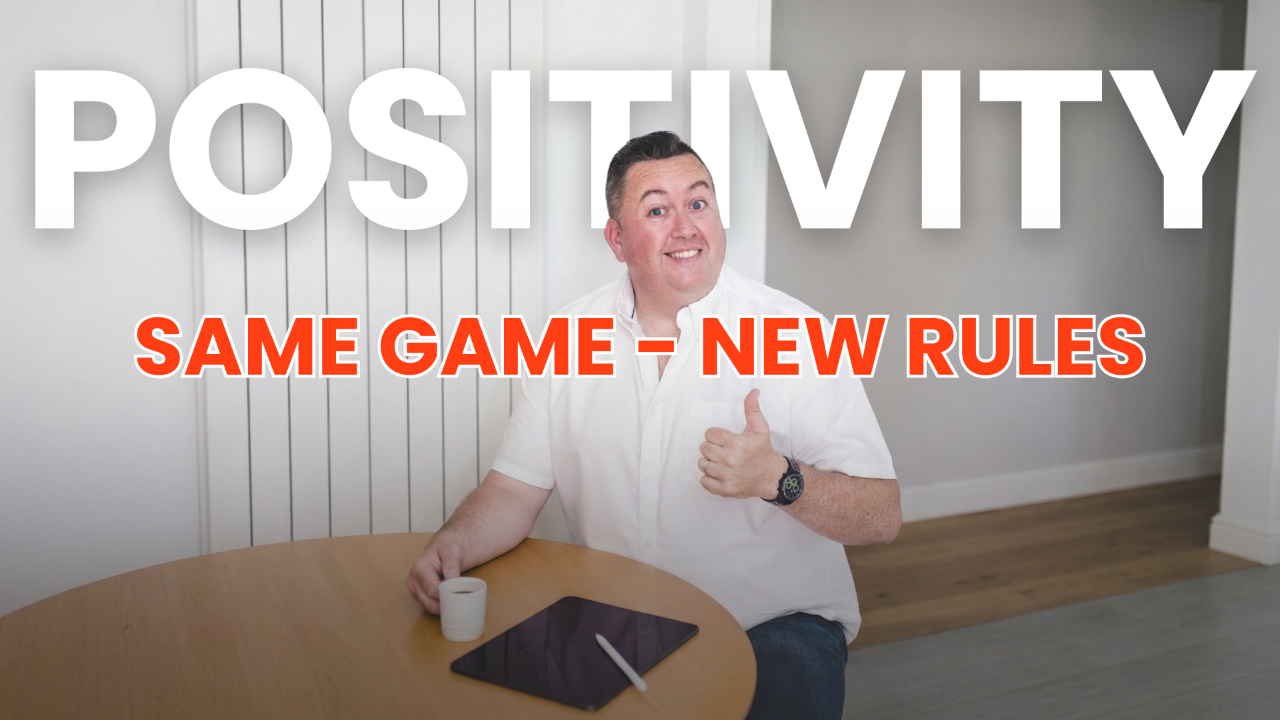
I've been doing a lot of thinking lately about the way I communicate.
For a while now, I've noticed that a lot of my content included things like "don't listen to the gurus" or "forget what the bro marketers told you." I'd often point out what's broken before sharing what works.
It felt like the right approach and it's the way a lot of marketing works. It's often a good strategy in copywriting as contrast is a powerful tool. And honestly, there's a lot of bad advice out there, so my aim was always to help.
But here's what I realised.
Everyone's doing it.
Scroll through any feed and you'll see endless posts about "the #1 mistake coaches make" or "what nobody tells you about funnels." It's become noise.
But, the biggest thing that I have come to realise is that it's all about leading with negativity.
That's not who I want to be.
So I'm making a change. And I want to tell you why.
Why Negativity Works So Well
Here's the thing. Negativity in marketing isn't random. It's deliberate. And it's taught.
When I learned copywriting years ago, one of the first things drilled into me was the power of "agitation." The formula goes like this: identify the pain, twist the knife, then present your solution as the relief.
It works because of how our brains are wired.
We're built to pay attention to threats. It's survival instinct. A headline about "the 5 foods destroying your gut" gets more clicks than "5 foods that support digestion." Fear activates the amygdala. Possibility activates... well, not much by comparison.
Loss aversion is real. Studies show we feel losses roughly twice as intensely as equivalent gains. So "stop losing clients" hits harder than "start winning clients." Same message. Different emotional weight.
And then there's the enemy effect. When you position yourself against something, whether it's gurus, complexity, or the "old way," you create tribal belonging. Us versus them. People don't just buy your product. They join your side.
This is why the "anti-guru" space is so crowded. This is why every other post is about what's wrong, what's broken, what to stop doing.
Because it works.
Where Pure Negativity Goes Wrong
But here's what the copywriting courses often skip over.
There's a line between highlighting a genuine problem and manufacturing fear to sell something. And that line gets crossed more often than people admit.
When you lead with negativity consistently, a few things happen.
First, you train your audience to stay in problem-mode. They become better at identifying what's wrong than imagining what's possible. That's not empowerment. That's dependency.
Second, you attract people who bond over shared frustration rather than shared vision. Frustration fades. Vision sustains. The clients who come because they hate complexity are different from the clients who come because they want freedom. Both might buy. But only one type stays.
Third, and this is the one that got me thinking, you become defined by what you're against rather than what you're for. That's a reactive position. Not a leadership position.
I've watched creators build entire brands on tearing down other people's methods. And I've watched those same creators struggle to articulate what they actually stand for when the criticism runs dry.
Negativity is a spark. It's not a foundation.
The Noise Problem in ALL Content Marketing
There's also a practical issue.
When everyone leads with negativity, nobody stands out by leading with negativity.
Scroll your LinkedIn feed right now. Count how many posts start with a problem, a mistake, a myth, or something to avoid. It's relentless.
The "contrarian take" became the mainstream take. The "truth bomb" became the standard format. We're drowning in content that tells us what's wrong with everything.
And here's the irony. In trying to cut through the noise, we all started making the same noise.
I don't want to be another voice telling you what to fear. There are plenty of those already.
What My SEED Marketing Model Actually Means
I keep coming back to my SEED Marketing framework. Not because it's mine, but because it solves this problem. It's all in my book Simplify The Funnel®
SEED stands for Share, Engage, Echo, Deliver.
- Share means demonstrating your expertise through frameworks and insights that come from real experience. Not by tearing down someone else's framework. By showing yours.
- Engage means inviting genuine conversation. Questions. Responses. Connection. Not just broadcasting problems and waiting for people to feel bad enough to buy.
- Echo means reflecting your actual values in everything you create. When people consume your content, they should know who you are and what you stand for. Not just what you're against.
- Deliver means giving people something they can use immediately. Actionable value. Not just agitation followed by a pitch.
Notice what's missing from that framework? Leading with negativity. Attacking competitors. Manufacturing fear.
SEED is about displaying your message with your values. It's about building authority through contribution, not criticism.
The Shift I'm Making
From now on my aim is to be the one leading with what works. Not what's broken.
Instead of telling you what to stop doing, I'll show you what to start doing. Instead of tearing down bad advice, I'll just share better advice. The contrast will still be there. You'll still see the difference. But I won't need to criticise anyone else to make my point.
Something that I have come to learn is that confident people don't need to tear others down to stand out. They just stand for something.
I stand for simplicity. For building a business that serves your life instead of consuming it. For doing less, but better.
That's the energy I want to bring. Every email. Every video. Every post.
Here's What I Want You To Remember
Marketing built on negativity works in the short term. But it creates audiences primed for fear, not action. It builds tribes bonded by frustration, not vision. And it positions you as a critic, not a leader.
You can still acknowledge problems. You can still offer contrast. But lead with the solution. Lead with what's possible. Lead with your values.
Because in the end, the creators who last aren't the ones with the hottest takes on what's wrong with everything.
They're the ones who showed a better way.
So here's my challenge for you this week...
Look at your last five pieces of content. Count how many lead with a problem, mistake, or criticism. Then ask yourself: would people know what I stand FOR based on this content?
If the answer is fuzzy, maybe it's time to flip the script.
Let me know what you find. Comment below.