[#023] Is An Ad-Free Future Online Really Here?
Feb 01, 2026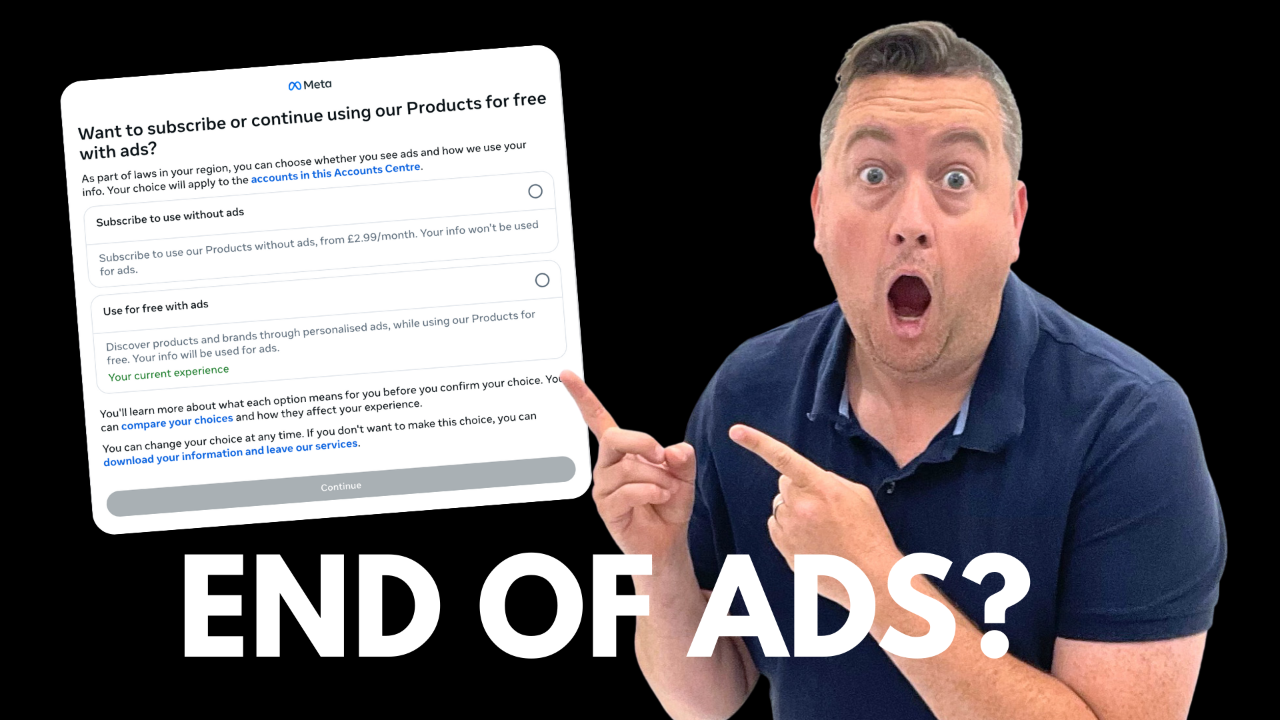
This week I was on a call with a client when I got a notification from Meta. It was the screenshot that's been doing the rounds. You've probably seen it too.
"Want to subscribe or continue using our Products for free with ads?"
Two options. Pay £2.99 a month to remove ads completely. Or continue free with ads.
My client looked worried on the Zoom call. "Does this spell the end for Facebook advertising?"
It was a similar reaction that I had from a few others in my community a few weeks ago when, OpenAI announced they're testing ads on ChatGPT in the US. Google confirmed Gemini will have ads in 2026.
The whole landscape is shifting. But, here's what I told him. And it's what I want to tell you.
This isn't the end of anything. It's the beginning of something better.
What's Actually Happening in The Ads World Online
Let me give you the facts without the drama.
Meta has been rolling out ad-free subscriptions in Europe since late 2023. This was their response to EU privacy regulations that required them to offer users a choice about tracking. In January 2026, they're introducing a "less personalised ads" option too. Now the same model is coming to the UK at £2.99 per month and I am sure that it is not going to just be limited to this region of the world.
OpenAI announced on January 16th that they're starting to test ads in ChatGPT for free and "Go" tier users in the US. Their Plus, Pro, Business and Enterprise subscriptions remain ad-free. The reasoning is straightforward. Running AI models is expensive. Very expensive. And only about 4-5% of ChatGPT's 800 million weekly users actually pay for subscriptions. The numbers don’t work without another revenue stream.
At the same time, Meta's advertising algorithm has fundamentally changed. Their new "Andromeda" system, rolled out globally in late 2024 and early 2025, has shifted how ads are delivered. The old approach of narrow targeting, multiple ad sets, and audience testing, doesn't work anymore. The algorithm now controls targeting. Your creative is the most important part of any Meta ads campaign.
So yes. Things are changing. But change isn't the same as ending.
Why I Believe All of This is Actually Good News
When I shared Meta's screenshot on Facebook, the comments were interesting. One person said "I gladly pay £10 a month for YouTube premium." Another admitted she "never would run Facebook ads again" because the world is changing. Someone else said "I opted in for the free version - I can tune irrelevant ads out."
But the most insightful comment came from Darren, who asked the same question I have been putting to people…
"Is your avatar the person who would pay for premium?"
That's the right question to be asking.
The people who stay on free, ad-supported platforms are making a choice. They're choosing to remain in an environment where advertising reaches them. For many businesses, especially those selling to mainstream consumers, that audience isn't disappearing. E-commerce will still thrive and people who want to discover new products will continue seeing ads.
But there's a bigger picture here that I see happening…
For years, we've been told that paid advertising is the best way to grow a business online. Buy traffic. Scale ads. Pour money into the machine. That advice made sense when organic reach was dead and algorithms favoured whoever paid the most.
Now the algorithms are changing again. And they're rewarding something different.
Quality content. Genuine engagement. Real value.
Meta's Andromeda algorithm now prioritises creative quality over targeting precision. Facebook referral traffic has quadrupled for some publishers in 2026 compared to last year. The algorithm favours content that generates meaningful engagement - comments, shares, time spent - all of this over just passive likes.
The platforms are essentially telling us what we need to be doing…
Create better content, and we'll show it to more people.
What Smart Marketers Are Doing Now
I spent an hour on a call this week walking through exactly this with a client who runs property investing workshops. His concern was understandable. "If people can pay to avoid my ads, how do I reach them?"
My answer… become someone worth finding. Let me explain what that means practically.
1 - Content becomes your marketing.
YouTube remains the second most-visited website globally. It reaches over 2.7 billion users. And unlike social feeds where content disappears after 48 hours, YouTube videos continue generating views for months or years. When someone searches "how to invest in property UK" and finds your video, they're not seeing an ad they want to skip. They're finding content they actually want.
2 - Quality beats volume.
The days of spamming 50 variations of the same ad are over. The new Meta algorithm actually punishes repetitive creative. It rewards genuine diversity - different messages, different angles, different formats that speak to different stages of the customer journey. One great piece of content outperforms ten mediocre ones.
3 - Your funnel matters more than ever.
One of the best ads experts I follow, Jason Hornung, put it this way, "Small backend shifts equal massive ROAS lifts." The new algorithm needs strong backend signals from your funnel - how many people show up to calls, stay engaged, and convert. When your funnel works properly, the system rewards you with lower costs and higher quality traffic. Jason is someone I have followed, and has also been the go-to ads person for many of the Gurus. His advice now… “Your funnel performance isn't optional anymore. It's the price of admission.”
4 - Human connection beats automation.
This is something I wrote about in my book and have been saying for years now - the businesses winning right now are the ones picking up the phone, sending personal video messages, having real conversations. When everyone's feed is cluttered with AI-generated content, authentic human connection stands out.
The Shift We All Need to Make
Those that have been banging the drum and saying that YouTube is your best lead generation opportunity - we need to listen to them. And I do too! We all need to be creating content genuinely helps people builds more trust than any ad ever could.
But here's what changed my mind from "this is a good idea" to "this is urgent."
The platforms that have relied entirely on advertising revenue are now diversifying. Meta's offering paid subscriptions. ChatGPT's introducing ads. YouTube has Premium. These aren't random decisions. They're responding to a fundamental shift in how people want to consume content online. People are tired of being bombarded with ads.
But here's the thing, those same people that opt-out of ads by paying a small subscription, they will actively search for solutions to their problems because the ads are not targeting them any more. Meaning, they will go to the one platform they can search for that content - YouTube.
They will search and then they'll watch a 20-minute YouTube video that answers their question. They'll subscribe to newsletters that provide real value. They will look for podcasts that serve them well. They'll buy from people they've come to know and trust through content.
The ad-resistant audience isn't unreachable. They're just choosing how they want to be reached. And they're choosing content over interruption.
As We Simplify OUr Marketing Here’s What I Believe We Must do Moving Forward
Let me give you the practical steps I discussed with my client this week.
1 - Start with one content anchor.
Don't try to be everywhere. Pick one platform where your ideal clients spend time. For most B2B and expertise-based businesses, that's YouTube. Create one substantial piece of content per week. A video that genuinely answers a question your audience is asking.
2 - Repurpose ruthlessly.
That one video becomes a podcast episode (extract the audio). It becomes three social posts (key points as clips). It becomes a newsletter (transcribe and edit). One idea, many formats. This is how you build presence without burning out.
3 - Build your email list.
Email marketing continues to be one of the highest-converting channels. And unlike social platforms, you actually own that relationship. When someone gives you their email address, they're giving you permission to reach them directly. No algorithm can take that away.
4 - If you're running ads, simplify your structure.
The new algorithm rewards consolidated campaigns with diverse creative. One campaign, one ad set, multiple genuinely different creative variations. Stop over-complicating your ad account. Let the algorithm do what it's designed to do.
5 - Fix your backend.
Before you worry about reaching more people, make sure the people you're already reaching can actually convert. A tight funnel where more leads show up to calls, stay engaged, and become customers will improve your ad performance automatically.
Here's What I Want You to Remember…
The death of advertising has been predicted many times before. It hasn't happened yet, and it won't happen now.
What's dying is the lazy approach to marketing. The "set up some ads and hope for the best" strategy. The belief that you can buy attention without earning trust.
What's emerging is something better. A landscape where the businesses that create genuine value get rewarded. Where quality content reaches more people than mediocre ads. Where human connection matters again.
For those of us who've been building this way all along, this isn't a crisis. It's confirmation.
The future belongs to the helpful. The genuine. The valuable.
And that's good news.
So, here's my challenge for you this week...
Create one piece of content that genuinely helps someone in your audience. Not a pitch. Not a promo. Something useful. Answer a question they're actually asking. Then share it.
Keep it simple,
Ant
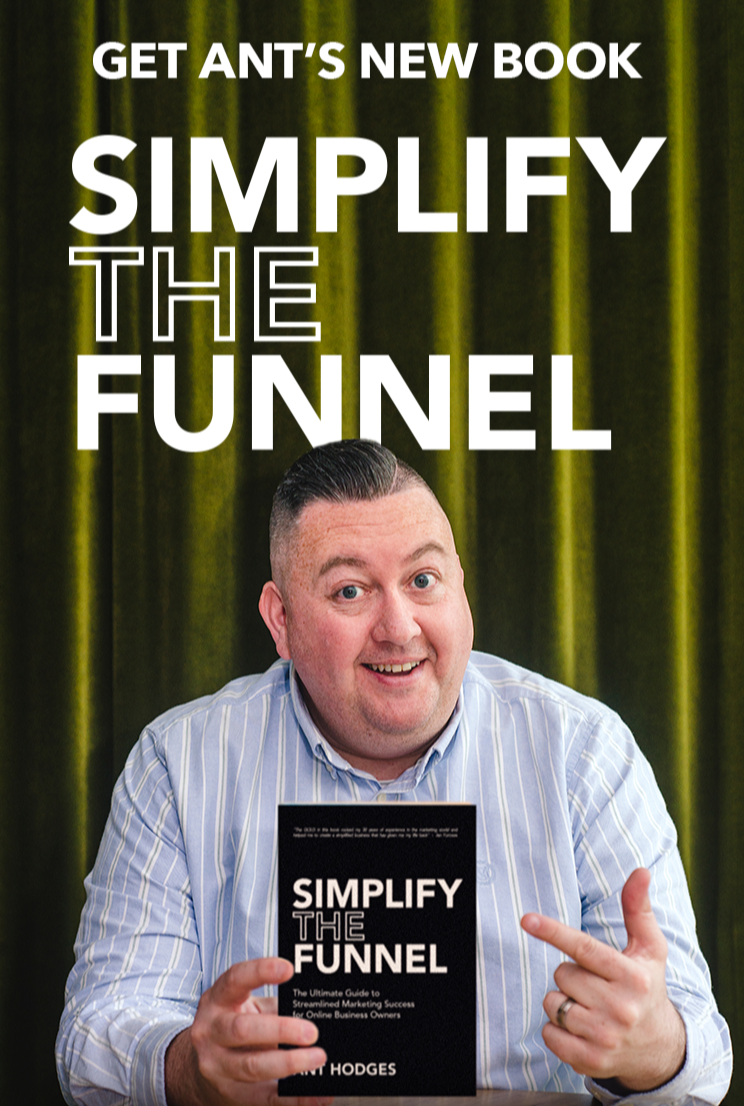
P.S. If you're still relying heavily on paid ads and want to build a content-first approach, my book "Simplify the Funnel" walks through exactly how to create a marketing system that doesn't depend on buying attention. You can grab it at www.simplifythefunnel.com